Posts

SMT PCB Assembly: Revolutionizing Electronics Manufacturing

Image
Surface Mount Technology (SMT) has revolutionized the world of electronics manufacturing by enabling the efficient and cost-effective assembly of complex printed circuit boards (PCBs). SMT PCB assembly has become the standard method for producing electronic devices, ranging from smartphones and computers to medical equipment and automotive electronics. In this article, we will explore the intricacies of SMT PCB assembly, its advantages, and the key components and processes involved in this advanced manufacturing technique. Understanding SMT PCB Assembly: SMT PCB assembly involves the mounting of electronic components directly onto the surface of a printed circuit board using automated machinery. This technique has largely replaced the older through-hole assembly method, which involved inserting component leads through holes in the PCB and soldering them on the other side. SMT offers several significant advantages over through-hole assembly, including smaller form factors, increase...

The Benefits of Plastic Injection Molding in Manufacturing

Image
Introduction Plastic injection molding stands as a highly prevalent manufacturing process, delivering a multitude of advantages to businesses operating in diverse industries. This article delves into the perks of plastic injection molding in manufacturing, examining its applications, efficiency, cost-effectiveness, and environmental impact. By comprehending these benefits, companies can make informed choices and harness the versatility of this technique to augment their production capabilities. The Advantages of Plastic Injection Molding in Manufacturing It is a versatile manufacturing method that provides several advantages, making it a popular choice among manufacturers. Let's explore some of these benefits: 1. High Efficiency and Production Speed One notable benefit of injection molding is its capacity to effortlessly manufacture large quantities of intricate parts. The procedure entails injecting liquefied plastic into a mold, where it solidifies and adopts the mold cavity...

Understanding Electronic Manufacturing Services - A Comprehensive Industry Overview

Image
In today's fast-paced and technology-driven world, electronics have become an integral part of our lives. From smartphones to medical devices, the demand for electronic products is continuously increasing. With this demand, there is a need for companies to manufacture high-quality electronic products efficiently and cost-effectively. This is where electronic manufacturing services (EMS) come in. In this article, we will discuss the basics of electronic manufacturing services, their benefits, and how to choose the right EMS provider. Table of Contents What are Electronic Manufacturing Services? Types of Electronic Manufacturing Services Printed Circuit Board Assembly (PCBA) Box Build Assembly Testing Services Design Services Supply Chain Management Benefits of Electronic Manufacturing Services Factors to Consider when Choosing an EMS Provider Quality Control Cost-effectiveness Scalability Location Customer Service Conclusion FAQs 1. What are Electronic Manufacturing Services? Electr...

Following These Steps in Electronic Product Design

Image
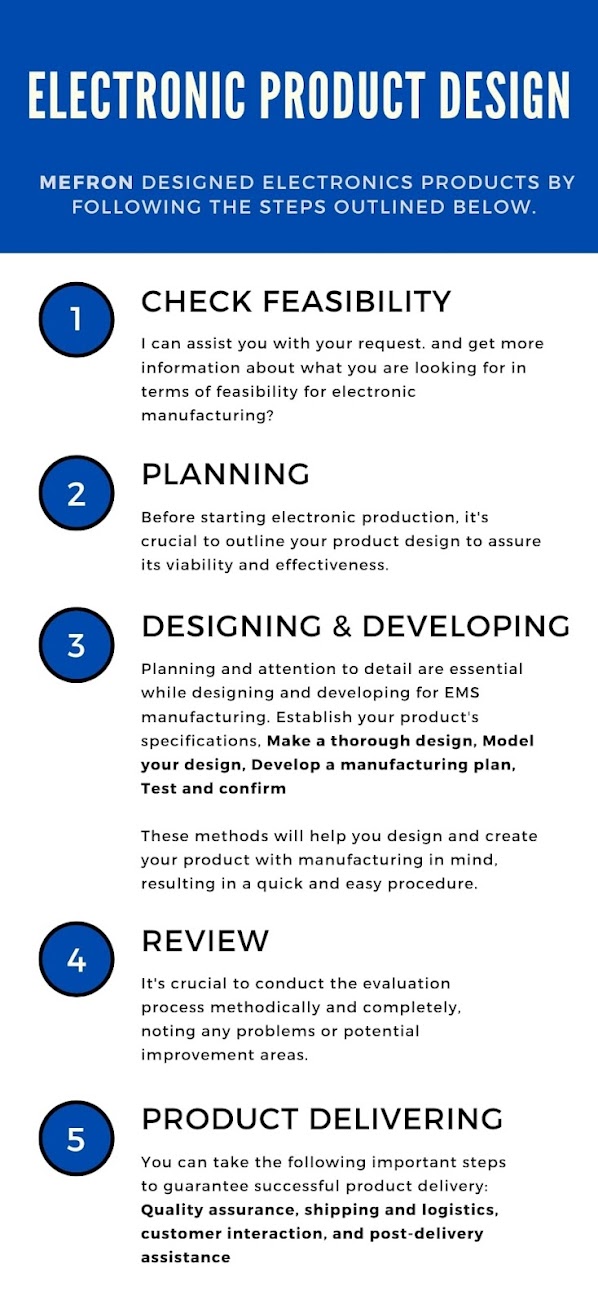
The steps in the design of an electronic product are as follows: What phases are involved in designing an electronic product? Specify the needs: The first step is to specify the product's criteria. This include figuring out the product's function, the target market, the necessary characteristics, and any requirements that must be taken into account. Research and feasibility analysis: the next steps to take in order to ascertain whether the product can be successfully created and produced within the necessary constraints. Conceptualization and design: The product of EMS design team can start the conceptualization and design process after the feasibility has been determined. To describe the product's look and feel, this requires making sketches, prototypes, and other design papers. Design validation and testing: The design must be validated and tested before moving on to the manufacturing phase to make sure it complies with the necessary requirements and performance stand...

This Electronic Manufacturing Process is Helping Your Business

Image
The electronic manufacturing process is essential knowledge for OEMs, PCB designers, and product designers. The step-by-step process influences the final product's reliability, longevity, and design. If you're developing a product and want to know where it fits into the manufacturing process, this article will tell you everything you need to know. An electronic manufacturing process is a way to produce electronics using computers. It has been around since the 1980s. Today, it is still widely used. What is the electronic manufacturing process? It is the process of creating a product that uses electronics. Electronics are used in almost all products, from cars and computers to cell phones and televisions. The manufacturing process differs for different product types, standard requirements, product grades, sizes, usage, and shape requirements.  When it comes to manufacturing electronic products, PCBs are the foundation of any design. They're used to connect all of your compon...

Things OEMs should know about Plastic Injection molding

Image
Plastic injection molding is a manufacturing process in which plastic materials are heated and injected into a mold to produce a wide variety of parts and products. This process is widely used in the production of a variety of plastic products, including medical devices, toys, and automotive parts. The method is considered to be perfect for the quick turn of single-mold plastic parts.   The plastic injection molding process The process of plastic injection molding begins by heating the plastic material, which is typically in the form of pellets or granules, to a high temperature. This melted plastic is then injected into a mold, which is a hollow metal or plastic cavity in the shape of the desired part or product. The mold is typically cooled with water, which helps the plastic to solidify and take on the shape of the mold. Once the plastic has solidified, the mold is opened and the finished part is removed. The part may then be trimmed, painted, or otherwise finished as need...

Do You Know The Difference Between EMS And OEM?

Image
OEMs and EMSs are the two prominent terms used by people involved in electronic manufacturing ( EMS ) and product designing. In fact, they are the different layers of product manufacturing but are often considered the same. Both layers work together to achieve the goal of introducing new electronic products to the market. Let's break the ice in this quest, they are not the same, and we will see how they are distinct in this blog.  What is an Ems? Ems is a contract manufacturer, which means that it outsources the manufacturing of products to other companies. For example, if you have an idea for a new product but don't have the funds or expertise to make it yourself, you could use an Ems as your partner in developing and manufacturing it. They can manufacture an entire product according to OEM's design or any particular part of the product. EMS also provides services including, PCB manufacturing, assembly, testing, metal fabrication, plastic molding, wire harness, and supply ...